Saturday, October 26, 2013

Friday Funnies: Fail Edition

Friday Funnies: Fail edition!

1) That's not how you pipette
A collection of amusing movie and television scenes with some rather creative pipetting styles.  My favorite is the guy trying to pipette without a tip.


2) Fail Lab
Scientists dissect the best of the 'epic fail' videos and reveal hidden lessons on science topics such as evolution, pyrotechnics, or electricity. Episode one is below.


The equivalent of PostSecret for scientists. The hashtag lets you report less-than-stellar lab practices that would never, under any circumstances, end up in a publication. Some are weird, some are scary, but almost all of them are amusing. 


Friday, October 11, 2013

The Culture of Women in Science: A Dialogue


I'm sure a number of people have read the NY Times article published last week on Women in the Sciences. If you haven't seen it, here is a link to the original article. Go ahead, I'll wait if you need to read it. 

Now that everyone is on the same page, I want to take a few minutes to address some of the points it brings up about motivation and the culture of science. When I first saw this article posted, I was more than a bit skeptical. I was expecting another of the generic pieces that seem to appear once a year about women and minorities (or the lack thereof) in the sciences--pieces that mean well but never really advance the dialogue. There is certainly some of that in the article, but one of the things that stuck with me was this quote:

"As so many studies have demonstrated, success in math and the hard sciences, far from being a matter of gender, is almost entirely dependent on culture--a culture that teaches girls math isn't cool and no one will date them if they excel in physics; a culture in which professors rarely encourage their female students to continue on for advanced degrees; a culture in which success in graduate school is a matter of isolation, competition and ridiculously long hours in the lab; a culture in which female scientists are hired less frequently than men, earn less money and are allotted fewer resources."

GMP over at Academic Jungle had similar sentiments about a month ago:

"You constantly work against the background noise of "You don't belong here. You should not be doing this. This is no place for you." This is a tremendous overhead in terms of sheer energy, motivation, and perseverance that one has to put in just to get up in the morning to do the work. Trust me, women in male-dominated disciplines don't have the issue of lack of motivation; just the fact that they are there and haven't fled is a testament to their tenacity, which, if we could somehow measure it, we would find few men could rival. But much of it must continuously be used on fighting this negative background, which men really don't have to do. Men are not constantly communicated that they are constitutionally unable or unworthy to do their work, assumed incompetent until proven otherwise; for men, in contrast, competence is assumed."

This constant feedback, or as the article describes it, "all the little kicks that women get," can start to wear on you. And this feedback starts early:

As a 9 year old at summer camp, I signed up for a week-long activity where you learned about gears, wires, motors--this was all basic stuff, but at the end of the week everyone built a small battery-powered car. I was the only girl. Whenever I asked a question, the teacher would sigh or make a small quip about how "a woman's mind" worked. When my male peers asked nearly identical questions 5 minutes later, they were praised for their intuitive thinking. In 6th grade, a classmate and I placed into a math class with older students. When we arrived at the first class, the teacher greeted my classmate warmly and pointed him to an empty desk along the side of the room. The teacher then turned to me and asked, "Who are you? What are you doing here?" In high school, I was once accused of cheating on a science test because I performed basic algebra and unit conversions in my head. Never mind that the person I allegedly copied from received an 80%--I scored 98%.

How do we fight bias? How do we fight the idea that women are not as good as men in STEM disciplines? On an individual level, many women are part of the "ignore-the-naysayers-and-keep-at-it" school of thought. I will be the first to admit that I used this strategy in middle school and high school. Yet the drawback of ignoring naysayers is that it doesn't address the root of the problem--sexism is inherent in the structure of the system. Thus, we return to the age-old question:

How do we get more girls/women to stick with science?

There is little doubt in my mind that the structure of the field needs to change. It's not only about encouraging women to remain in research, but instead actively facilitating our stay. I've listed a few starting points for this structural overhaul. This is by no means an exhaustive list of ways that we can encourage women to remain in the sciences. Nor is this list intended as things that only women should be doing. In order to make progress--real change--the scientific community must come together to address these concerns.

1) Call people out on their behavior
This is perhaps the most important point and why I've chosen to list it first. Both men and women (yes, we are not immune) can show biases against women in the sciences. Don't believe me? There was a study by Moss-Racusin et al. published in PNAS last September whereby science faculty from research universities rated application materials of a student for a lab manager position. Despite identical resume qualifications (and a randomly assigned male or female name for the student) faculty participants rated the male applicants as "more hire-able" than the female applicants and offered the fictional 'John' a greater starting salary. Both male and female faculty members did this. To start making changes, we need to address personal and departmental biases. 

A) Start with your own behavior and biases:
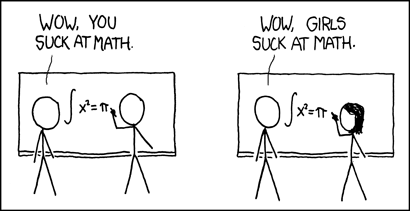
Don't assume incompetence until proven otherwise. Don't assume women at scientific conferences are just "along for the ride." Don't assume a women is dumb if she asks a question in class or a seminar. Don't generalize if someone makes a mistake (See the xckd below): 


B) Recognize the biases of others: All of the statements in the paragraph above also apply here. In short never assume anything. Draw attention to these people. My personal favorite: Academic Men Explain Things to Me. This website deals with an all too common problem in STEM fields: mansplaining. Recognizing bias is only the first half of the battle. If you do encounter mansplaining, discrimination or sexism, how should you respond? 1) Cite Facts: Women earned over 50% of the bachelors degrees in chemistry last year. 2) Question their position: What makes you say that? Do you think that's really the case? In some instances, the discriminators are just repeating something another person said. When asked to stop and really confront the position, they may change their tune. If not, refer back to point #1 and cite facts. 3) Respond directly: I don't think about women that way. OR Would you have said [statement] if I was male? OR  I take offense at [statement]. That was sexist. Tell people why their comments were sexist. Ask for what you want and don't want to be said. Will some people react poorly to being confronted directly? Yes, but when others are unwilling to honor requests about how we prefer to be treated, it is not our problem for speaking out, their behavior is the real problem.

2) Promote women scientists
Besides Marie Curie, how many historic women scientists can you name? What about current women in science fields? Who was the most recent woman to win a Nobel Prize for physics, chemistry or medicine? (Hint: no women in 2013). The sad fact is that we hear a great amount about the accomplishments of men. Female scientists often face discrimination or outright denial of their contributions; their work attributed to male scientists. Some notable examples from the 20th century include Rosalind Franklin (the structure of DNA) Lise Meitner (nuclear fission) and Marietta Blau (high energy particle physics). Don't forget to include the contributions of these and other women when teaching in your field. Their contributions are no less important to our understanding of nature.

Rosalind Franklin

When nominating or selecting people for awards, don't limit your field to only contributions by male scientists. Nobody wants to be the "token woman" and I'm not suggesting a quota system. But we need more awards to be distributed like the MacArthur "Genius" awards (11 of the 24 awards went to women this year), instead of like the Society for Industrial and Applied Mathematics Fellows (2 of the 33 Fellows). I need to believe that women are doing cutting-edge research that is just as interesting as their male counterparts...if only someone would allow them into the spotlight.

3) Mentor in whatever capacity you are able to do so.
As an undergraduate, I was involved in Macalester's Women in Science and Math student organization. I was able to see first-hand the impact mentor/mentee relationships had on encouraging women to remain in STEM fields. Again, this is not intended to be something that only women can do. Women shouldn't have an obligation to mentor every single female student in a department. While women might be in a position to share unique perspective about being female scientists, I speak from personal experience when I say that some of the best advice I have ever received has been from male professors. Every little bit of time helps. Whatever capacity you wish to mentor--be it taking a student for the summer or offering to read someones application essays--all it takes to be a mentor is a willingness to contribute positively (8). This relates directly back to issues of culture and feedback. Mentoring shows women that someone is encouraging them, that someone "has their back," someone feels that they are not only allowed to be here with the guys, but that they deserve to be here.

Will it be challenging to change the face of science? Yes. Is it a worthy fight? Yes! Women are in academia to stay. So rather than trying to maintain the "old boys club" isn't it about time we change the paradigm that women shouldn't be in science?

Acknowledgements:
Special thanks to Naomi Y. and Louise G. for their helpful discussions and editing prowess.

References:
1) Eileen Pollack, "Why are there still so few women in science?"The New York Times. Published Online 3 Oct. 2013. 
2) GMP "What Impostor Syndrome is About." Academic Jungle. Web. 25 Aug. 2013. 
3) FemaleScienceProfessor "She Would Not Wish This on Her Nieces." FemaleScienceProfessor. Web. 1 Oct. 2013. 
4) Moss-Racusin et al. "Scientific faculty's subtle gender biases favor male students." Proc. Natl. Acad. Sci. USA. 2012. 109(41) 16474. 
5) xkcd "How It Works." http://xkcd.com/385/
6) Academic Men Explain Things to Me. Tumblr. http://mainsplained.tumblr.com/
7) Abigail Golden. "MacArthur's Genius Women: A look at the 11 female innovators recognized this year." Women in the World. Web. 1 Oct. 2013. 
8) Suggestions of ways to be a mentor:
    a) The NeXXT Scholars Program, which I wrote about in a previous post, is always looking for women to mentor.
    b) Volunteer at a local elementary/middle school as a tutor.
    c) Invite a high school or undergraduate student into your lab to do summer research.
    d) Offer to read college/grad school applications. Or when the time comes, offer to read drafts of scientific manuscripts.
    e) Take younger students out for ice cream or coffee, and let them ask questions about your life
    f)...and many more! There are hundreds of ways to mentor someone. 


Wednesday, October 9, 2013

If grad school doesn't work out...

PhDs by the numbers: (1)
7 PhDs awarded for every 1 faculty position
25% of biological science PhDs have a tenure-track position within 5 years of degree completion
70% of PhD students pursue postdoctoral training
50% of PhD students require 7 years (or more) to complete their degrees
33% of students who start a PhD program never finish


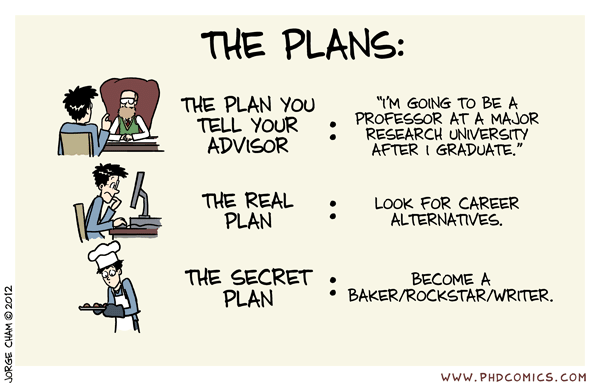
So what's a grad student to do? Jorge Cham gives a bit of humor to the depressing job outlook:

Before starting a PhD program ask yourself: Do you really need/want a PhD? (Let's be honest, the graph above is pretty grim.) If you decide to go ahead, make sure you develop skills that will allow you to leave academia if it becomes necessary to do so in the future. 

References:
1) Shillebeechx, M. et al. "The missing piece to changing the university culture." Nature Biotechnology 2013, 31 938-941. doi: 10.1038/nbt.2706
2) Jorge Cham "The Plans" PhD Comics. Published on the Web 2012. 

Saturday, September 28, 2013

Saturday, September 21, 2013

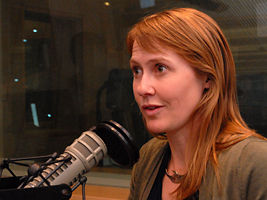
Paleontologist Kristi Curry Rogers

Kristi Curry Rogers, Associate Professor at Macalester College,
speaking on MPR in 2011 (Photo Credit: Tim Nelson)


Listen to Curry Rogers segment from Minnesota Public Radio as she discusses her on-going fossil research in Montana. (Originally aired 9-19-2013).


Try this link if the above audio doesn't work.

Tuesday, September 3, 2013

Advice for your first-year of graduate education

As part of bootcamp, our program typically hosts a BBQ, where the first-years can meet older students, get advice regarding labs and classes, that sort of thing. And as one of the student directors of bootcamp this year, I was thinking about advice that I could offer--that I wish I might have known when entering grad school.

This post is a modified version of an email I sent to one of my friends congratulating her on her graduation from Macalester and offering advice for her first year of chemistry graduate school. Names and places have been removed for privacy, but the advice is largely the same. I've included some gifs and added comments where necessary to explain some of my thoughts. Some of the advice is meant to be humorous, but much of it is serious and potentially applicable to older students. 


1) Never be embarrassed to attend a seminar just for the free coffee/cookies/pizza/beer. 
You might discover a field or project you never even knew existed.


2) NOBODY uses Comic Sans on their posters or power points. 
Corollary: Nobody uses papyrus either.

3) Make sure you treat administrative staff with the utmost respect.
These people know all of the ins-and-outs of the system. They can make your time in grad school easier, or they can make it much more challenging. Your choice. 
Corollary: Make friends with the admin assistants that have candy.


4) Advice from my Labmates: Don't F*** s*** up. And when you do, make sure you're learned something.
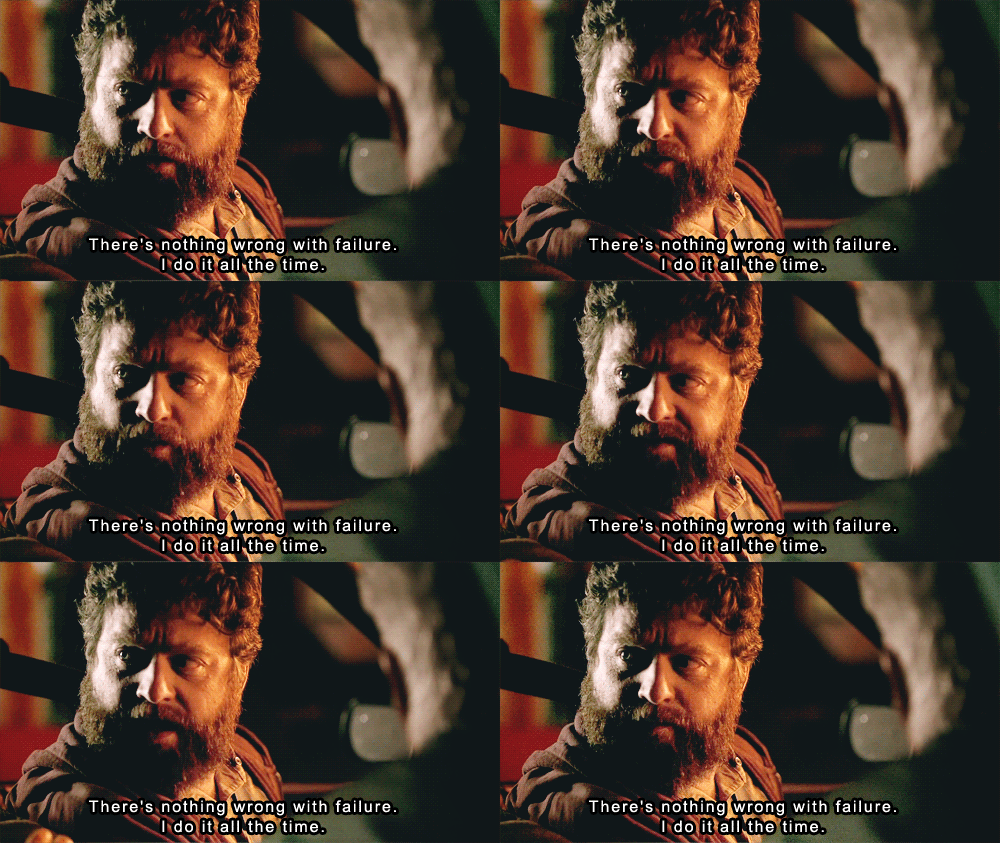
It's not a matter of if--trust me, you will screw up. One of the professors at UCSF gives the same speech to all the new students on the first day: "95% of what you do on a daily basis is fail. It's the 5%, it's when things work, that's when the magic happens!" 


5) Don't relate your self-worth to whether your experiment is successful or not.
See #4 above. To quote the biochemist Allan Wilson, "If everyone whose experiments failed stopped doing science, there wouldn't be any science."


6) Don't forget to enjoy your time there and laugh a bit. 
WhatShouldWeCallGradSchool
PhD Comics
The Hermitage

Corollary: Make sure you have outside hobbies/interests/friends beyond grad school.
We know you love your subject--or you wouldn't be here. But everyone needs a break now and again, no matter how awesome it is. Go surfing, go dancing, play soccer, play video games--whatever helps you clear your head. 


7) Remember to think about your mental/emotional health when joining a lab. 
A lab environment that works well for one student may not be work another student. If your program does lab rotations during the first year, pay attention while you are rotating. How do people get along in the lab? What kind of work-life balance is there? Some people like more social labs, while other just prefer to come and get their work done. What is the science like? Is this topic something you will enjoy for the next 4-6 years? How available would you like your advisor to be? Generally, younger professors will be more accessible, but might lack some of the funding of more established professors. Conversely, joining a well-established lab might mean that you rarely see your advisor, as they are often very busy. Ask advice from multiple people before you settle on a choice. Again, what works for some people might not work for others. 

Corollary: Pick the advisor, not the project. 


8) NEVER be afraid to ask for help.
You are a first-year. Nobody expects you to be an expert on the research and/or the methodology in a particular group. Ask professors, ask older students, ask postdocs, ask your classmates--chances are somebody at your university knows how to do what you need. 

Corollary: There is no such thing as a stupid question when it comes to research. 
As Isaac Asimov said, "The most exciting phrase to hear in science, the one that heralds new discoveries, is not 'Eureak' but 'That's funny...'"

Corollary: If someone gives you papers to read, read them. Don't just skim the abstract and think you know what is happening. 

Corollary: Know WHO to ask for help.
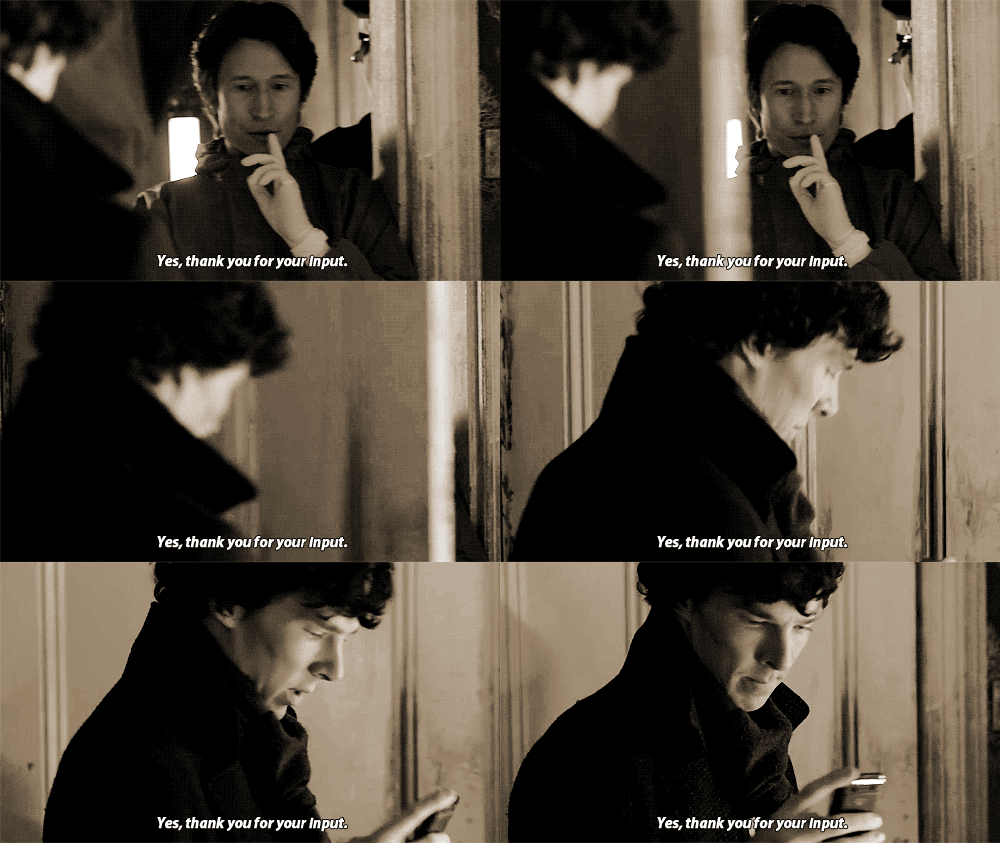
Certain people are much better at giving advice or explaining experimental methods than others. You don't want this to happen:


9) Grad School is Hard
You will spend the first year feeling like an impostor, not really sure why you were let into the school in the first place. You are convinced that at any moment, they're going to find out exactly how little you know. This is normal--and trust me, you are not the only one in your class who feels like this. Many people in my class were convinced that they were "the dumb one" that somehow snuck into graduate school. They brought you there for a reason. If you feel stuck, just listen to Neil's advice:


10) Enjoy it!
Welcome to grad school! We all like to complain from time to time when experiments aren't working, but honestly, I still can't believe someone is giving me money to research a topic I love. So...have great conversations with classmates and leaders in the field, travel to conferences in different countries, experiment with new ideas, enjoy your flexible work schedule, eat good food at department functions....the list goes on!

Friday, August 30, 2013

Friday Funnies

When I think I can explain my results...

...and then a new experiment crushes my theory.